What is a must-see in London? Here you will find an overview of the most important London attractions. In order to explore the most important sights, you should plan at least five days for your trip to London. Of course, you can also limit yourself to the most important highlights on a long weekend.
Buckingham Palace
Tower Bridge
London Eye
The Shard
Tower of London
Palace of Westminster with Big Ben
Westminster Abbey
Millennium Bridge & St Paul's Cathedral
Trafalgar Square
Piccadilly Circus
Oxford Street
Hyde Park
Harrods
Tip: To explore London and its many sights as cheaply as possible, we recommend the London Explorer Pass from Go City(order here*).
1. Buckingham Palace  There's a lot going on at Buckingham Palace during the changing of the guard, which is popular with tourists.
The most famous sight in London is Buckingham Palace. The official residence of the Queen was built in 1703 as a town house for a duke. After numerous extensions, the magnificent building now comprises three wings around an inner courtyard. A visit is a must on any trip to London!
Planning a visit to London? A stay in one of these London Hotels at tophotels.com will grant you easy access to the majestic Buckingham Palace.
Queen Victoria was the first monarch to stay at the palace in 1837. In her honour a 26-metre high monument with a golden statue, the Victoria Memorial, was erected in front of Buckingham Palace, which is a famous photo motif with the palace in the background. In the background.
Need to fly out directly after your Royal expedition? Conveniently located airport hotels let you catch your flight without any hassle. You can book here >> for your peaceful stay on the final leg of your memorable journey to London.
A highlight is the Changing of the Guard, for which thousands of tourists gather on the forecourt of Buckingham Palace at least every other day at 11 am. You can find the Changing of the Guard calendar here and more information about the thirty-minute ceremony here.
You should be there at least an hour in advance to get a good seat. Also note that the changing of the guard can be cancelled at short notice, especially in bad weather. There are also guided tours of the Changing of the Guard*.
Between the end of July and September , the West Wing of the Palace is open to the public as the Queen is in Scotland at this time. Tickets can be found here.
The Queen's Gallery(online ticket*) is a public art gallery in the palace and can be visited all year round, as can The Royal Mews, the royal riding stables. There are a total of 775 rooms at Buckingham Palace - crazy, isn't it?
A must-see on your trip to London is Tower Bridge, opened in 1894. The 65-metre high bridge towers are connected by two walkways. They house a bridge museum in which the construction and history of the bridge are shown in pictures and models.
There is also a glass-floored section through which you can look out over the river and the road that crosses Tower Bridge. Access to the footbridges is via the North West Tower on the Tower of London side.
An excellent view of Tower Bridge is from London Bridge, which was the only bridge over the river until 1739.
Below London Bridge, on the south side of the Thames, is also the tourist attraction The London Bridge Experience. Here you can take an interactive scary tour through the old walls, similar to the London Dungeon, a chamber of horrors with real actors. Read more about this in the article on the best insider tips in London.
Tip: The Thames River Cruise from Westminster to Greenwich is an unforgettable experience ( book here*).
The London Eye Ferris Wheel 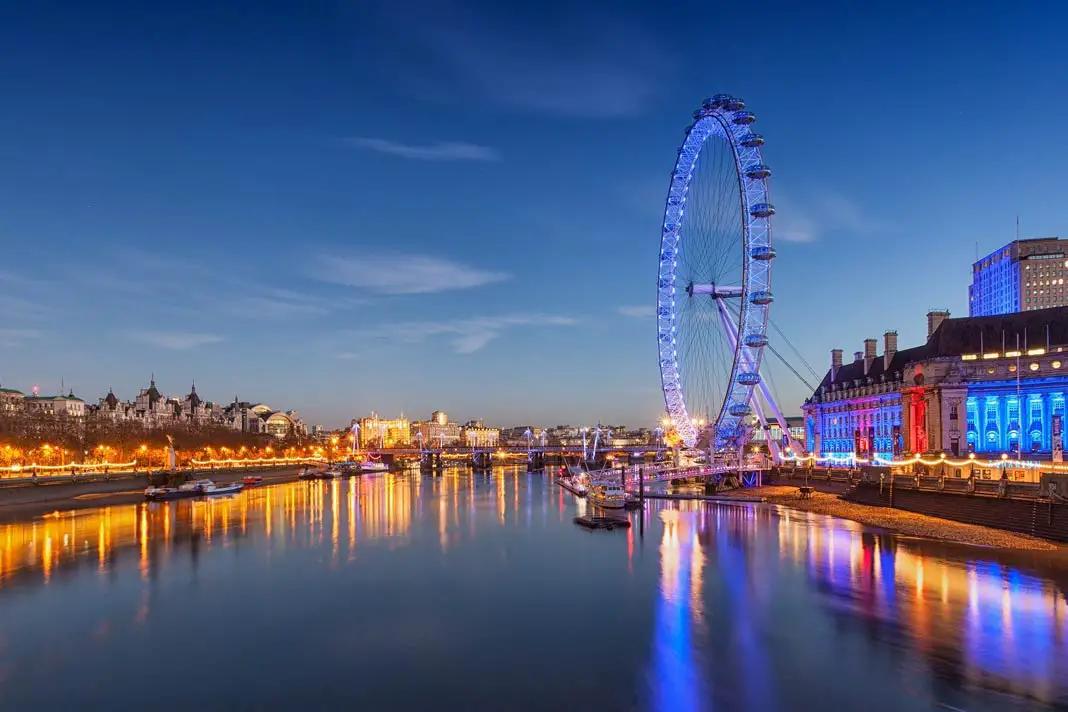 The London Eye is one of the newest attractions in London.
The next attraction in London that you should definitely see is the London Eye.
With a height of 135 metres, the London Eye is the highest Ferris wheel in Europe. The Ferris wheel has 32 glazed and air-conditioned gondolas, each with space for a maximum of 28 people. The wheel turns at an extremely slow speed of just under 1 km/h and takes about 30 minutes to complete one revolution. In good visibility conditions, you can see up to 40 kilometres away.
Especially at night, you have a spectacular view of the Palace of Westminster with Big Ben, which lies in the immediate vicinity on the other side of the Thames!
4 The Shard - the best viewpoint in the city 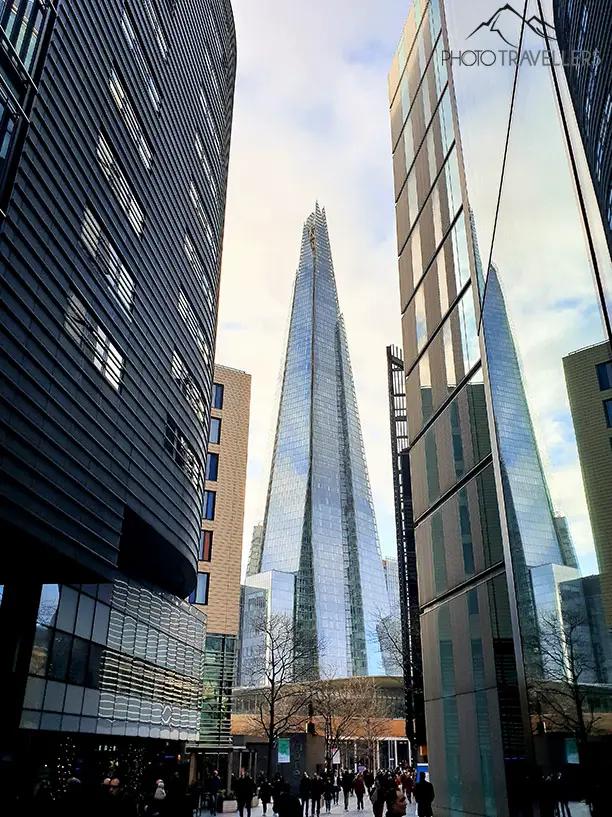
Of course, The Shard, London's tallest building with a height of 310 metres, should not be missing from our list of London's top sights.
The completely glazed skyscraper tapers to a point at the top. Hence the name, because "shard" means "shard" or "splinter".
The 72 usable floors include offices, flats, shops, a restaurant and a hotel. A unique viewing floor (online ticket*) is also part of the ensemble - it is almost twice as high as any other vantage point in the city.
5. Tower of London 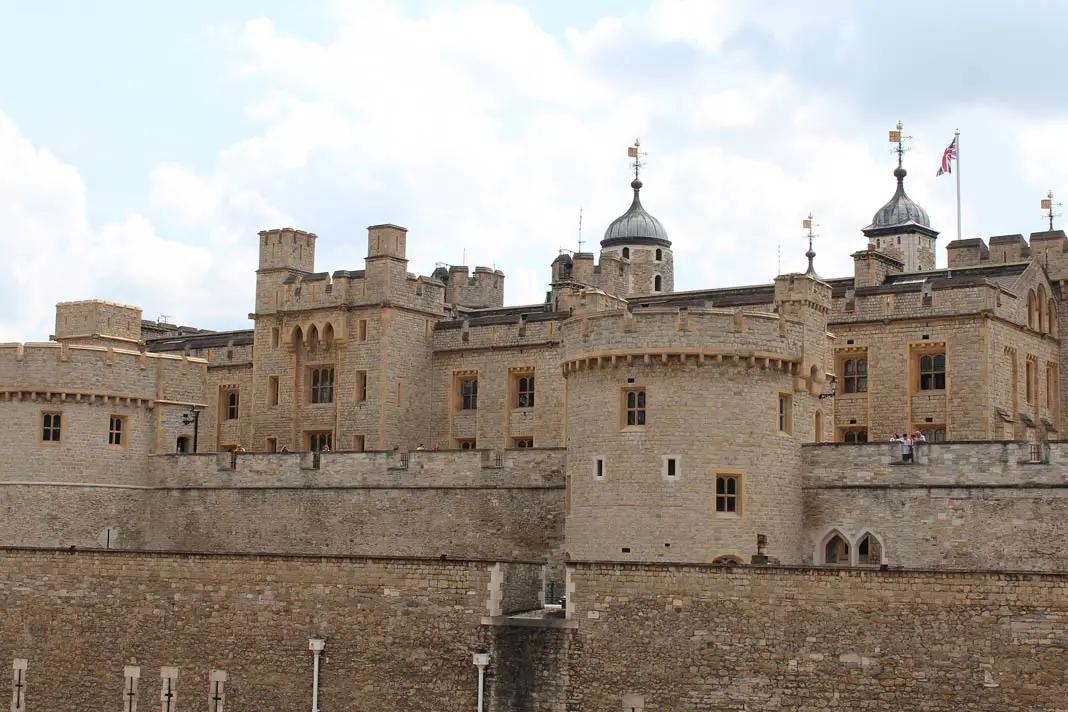 The Tower of London used to be a fortress and is now one of the top sightseeing attractions
Her Majesty's Royal Palace and Fortress of the Tower of London - this is the official name of the famous London sight. The complex comprises several buildings and areas. The two inner rings of the original three fortresses can still be seen today.
The Tower of London was built in the 11th century as a fortress by William the conqueror's fortress against the potentially hostile citizens of London. of London. It was eventually remodelled in the 19th century, but has been considered a tourist as a tourist attraction for around 600 years.
In the course of its history, the Tower has served as a residence, armoury, zoo, museum, mint, prison and execution site, among other things. For example, Anne Boleyn, the second of Henry VIII's six wives, was beheaded and buried here.
In the Tower of London, in addition to reconstructions of the living quarters and changing exhibitions with historical exhibits, you can also marvel at the Queen's crown jewels, which are said to be worth more than 20 billion pounds.
Every half hour, you can also take part in a tour with one of the famous Yeoman Warders, known colloquially as Beefeaters, which is included in the ticket. During the tour, you will learn interesting and curious information about the Tower.
Did you know, for example, that at least six ravens are always kept in the Tower of London? Supposedly, this goes back to a centuries-old legend that says that the kingdom and the Tower of London would perish if the ravens ever left the Tower. By the way, all the ravens have a name.
Palace of Westminster with Big Ben  The Palace of Westminster with Big Ben
A palace of a different kind is the Palace of Westminster. The building complex is also known as the Houses of Parliament and is the seat of the British Parliament in London. It consists of the House of Commons and the House of Lords.
The building was almost completely destroyed in a fire in 1834 and later rebuilt. later rebuilt. The oldest surviving parts are Westminster Hall from 1097 and the Hall , dating from 1097, and the Jewel Tower, built around 1365.
The most famous element of the Palace of Westminster and one of London's most famous landmarks is Big Ben. The clock tower is officially called Elizabeth Tower, only the heaviest of the five bells is actually called Big Ben. Originally a prison for members of Parliament, the tower was last used in 1880. Westminster Abbey is one of the most famous attractions in the city.
The Palace of Westminster is on the UNESCO World Heritage List, along with St Margaret's Church and Westminster Abbey. along with St Margaret's Church and Westminster Abbey. This is located directly across the road to the west of the Houses of Parliament.
Traditionally, monarchs are crowned and buriedhere. - Royal weddings also take place in the Abbey. Also famous people such as Charles Darwin and Charles Dickens are buried here. buried here.
Westminster Abbey was built from 1245 onwards and today belongs to the Church of England, which split from the Roman Catholic Church in the 16th century. Both from the outside and the inside, Westminster Abbey is an absolutely impressive highlight.
The Millennium Bridge will be recognised by "Harry Potter" fans in particular. In the sixth part of the film series, the bridge falls into the Thames. In reality, of course, the footbridge is still standing. But for all fans of the books and films about the wizard, here is one of the top attractions in London for Harry Potter fans.
The Millennium Bridge was designed by the British star architect Norman Foster. The suspension bridge is characterised by its unique design with two columns and eight curved supporting cables.
At the northern end of the Millennium Bridge is St Paul's Cathedral. It is one of the largest cathedrals in the world. Originally, another Episcopal church stood on this site, which was destroyed in the Great Fire of London in 1666.
In addition to the impressive interior of the cathedral with its dome including a whispering gallery and crypt, St Paul's is today best known for its magnificent view. The so-called Whispering Gallery, where whispered words can be heard through the curvature of the walls on the opposite side of the dome, can be reached after 257 steps.
After another 271 steps, you finally reach the highest viewing platform around the dome, called the Golden Gallery. The climb up a narrow spiral staircase is a bit tiring, but you will be rewarded with a breathtaking panoramic view of London. Between the Whispering Gallery and the Golden Gallery you will also find the Stone Gallery, a viewing gallery halfway up.
9 Trafalgar Square
Trafalgar Square has been a central meeting place since the Middle Ages and is the largest public square in London. Clearly, there is no way around this sight.
The square was named after the naval battle of Cape Trafalgar in 1805 and is commemorated today by a statue of Admiral Lord Nelson, who died in the battle, in the centre of the square. Incidentally, at a total of 51 metres, Nelson's Column is as high as the admiral's former ship.
Other monuments and fountains adorn the square. There is also the the National Gallery, which I will link to later. There is also a church and the South African and Canadian embassies. Embassy are located there.
Trafalgar Square also has a direct axis to Parliament, which is right next to Big Ben. Therefore, you have a great view of both of these sights.
The Ministry of Defence and 10 Downing Street, the residence of the Prime Minister of the United Kingdom, are also on this route.
10 Piccadilly Circus 
Another famous square and one of London's most popular meeting places is Piccadilly Circus. The square was originally a crossroads. Today, Piccadilly Circus is characterised by its large neon signs. Some people compare it to Times Square in New York.
Two other prominent buildings that frame Piccadilly Circus are the LondonPavilion, a former music hall. Pavilion - a former music hall - and the Criterion Theatre.
Also well known is the central focal point of the square, which is the Shaftesbury Memorial Fountain. The memorial fountain to the Earl of Shaftesbury is known as the Eros Fountain, although the winged aluminium figure on top of the on the top was not actually meant to represent Eros, but the Angel of of Christian charity.
Incidentally, the name Piccadilly comes from a 16th century tailor who lived and worked in what is now the area of the square and made much-worn collars with fine lace at the time. These were called piccadills, from the Spanish picadillo for "perforated".
11 Oxford Street  Shop till you drop on Oxford Street
Regent Street takes you from Piccadilly Circus to Oxford Street. At almost two kilometres long, Oxford Street is London's most important shopping street. Oxford Street is home to countless department stores and shops.
In ancient times, a street known as Tyburn Street ran along this stretch. Street. The name comes from the River Tyburn, which today runs completely underground. today runs completely underground.
If you're in London for Advent, don't miss the Christmas lights. The Christmas Lights on Oxford Street, Regent Street and throughout the city are unforgettable. Here you can find the most beautiful Christmas markets in London.
12 Hyde Park 
At the western end of Oxford Street is the Marble Arch. This arch of white Carrara marble, designed on the model of the Arch of Constantine in Rome, also gives its name to the nearest underground station.
Directly behind it begins the famous Hyde Park, which, together with the adjacent Kensington Garden, is one of the most popular sights in London. The two parks are two of eight Royal Parks that form the city's "green lungs". I'll introduce you to three more Royal Parks in the Insider Tips in London.
In the famous Speakers' Corner at the Marble Arch, anyone has been allowed to give a lecture on any topic without registration since 1872. The British royal family is the only taboo subject. While personalities such as Karl Marx, Lenin and George Orwell have spoken to the people at this popular meeting place, today you will see more bizarre figures there.
Hyde Park also has a large lake for swimming and rowing, a horse riding track, a bowling alley and extensive green spaces. Various events take place there and you can also discover many monuments and other great places in the park.
13 Harrods  A visit to Harrods is a must
At the southern end of Hyde Park is the next place of interest. It Harrods, London's most famous department stores' and one of the largest and most largest and most exclusive in the world.
The company was founded as early as 1834, while the current building was constructed between 1894 and 1903. The façade is lit by no less than 12,000 lamps, almost 300 of which have to be replaced every day. A highlight inside are the food halls in Art Nouveau style and the exclusive assortment.
You should at least take a look at this department stores'. However, you must bear in mind that Harrods is one of the most expensive places to shop in London, which is why visitors are expected to look their best.
Places of interest for Harry Potter fans
If you are a fan of detective stories or supernatural phenomena and want to get to know the dark side of London, take a look at the insider tips in London. There you will also find additional sights.
For all magic fans, I have the right article on London for Harry Potter fans. There you will find the most magical attractions of the city as well as inspirations and locations of the films and books.
For all creepy fans: On the tour in the footsteps of Jack the Ripper you will learn a lot about the dark side of the city ( book here*). The Harry Potter tour* is also worthwhile.
More travel tips for London
One of the most visited tourist attractions in London is the wax museum Madame Tussauds(buy online ticket*). Those who prefer classic museums also have a huge choice. The best include the British Museum, the Natural History Museum, the Tate Modern art museum, the National Gallery on Trafalgar Square and the Victoria and Albert Museum, a leader in art and design.
Tip: The London Pass* gives you access to over 80 attractions in the city.
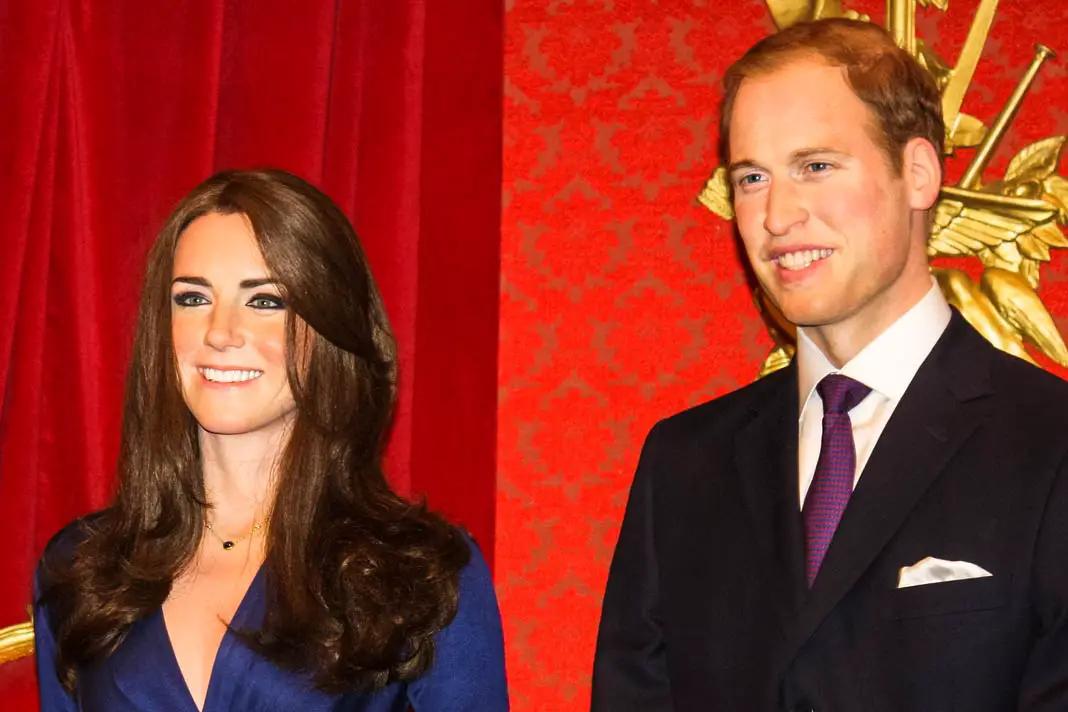
Madame Tussauds is world-famous - for example, you can experience Prince William and his Kate up close here.
The famous Royal Albert Hall hosts everything from symphony concerts to boxing matches. If you want to see a musical in London, the West End, London's Broadway, is the place to be.
Shakespeare lovers should not miss the Globe Theatre. It was built in 1599, reconstructed on its old site in the 20th century and has served as the venue for numerous theatre performances. Even today you can still get very impressive impressions there!
If you are enthusiastic about the British royals, you should also visit Kensington Palace(online ticket*). As the name suggests, it is located in Kensington Gardens, which directly adjoin Hyde Park.
An interesting insider tip is the Leake Street Tunnel(Google Maps) made famous by Banksy, where graffiti is allowed and even desired. The result is a place with great street art.

In the Graffiti Tunnel in Leake Streat, street art is desired
A final very impressive sight is the Neasden Temple, the second largest Hindu temple in Britain. This popular tourist attraction is located in the north-west of the city.
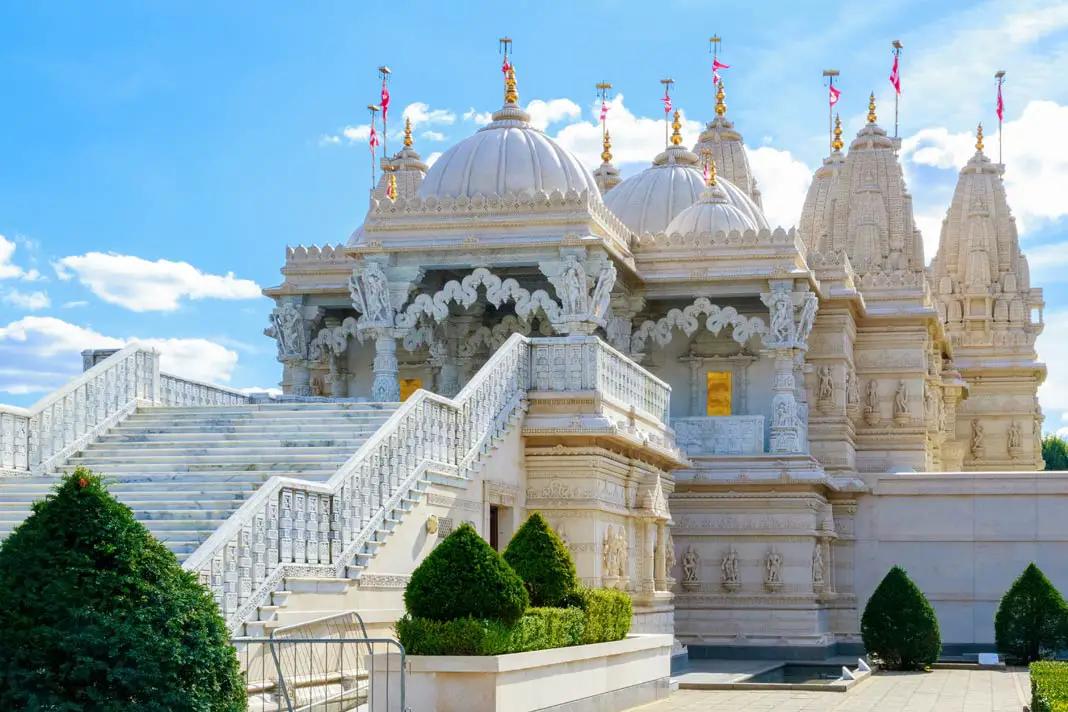
The Neasden Temple is a must for culture fans - Photo: Depositphotos by VictorHuang Where to stay in London - the best hotel tips
The 5-star Hotel Montcalm Royal London House (check rates here*) scores with a roof terrace including breathtaking views over the rooftops of London. The exclusive Shangri-La Hotel (check prices here*) also has 5 stars and is in a prime location in London's tallest building - The Shard.
The 3-star Motel One London-Tower Hill (check prices here*) is also only about 800 metres from Tower Bridge and has excellent guest reviews.
The Luxurious Apartment "N22" (check prices here*) is a flat with a garden view, which is not very common in London. It takes you a little longer to get to the city centre to the south, but you can also get to Piccadilly Circus from Wood Green Station in about 25 minutes on the Piccadilly Line.
Map with all sights in London
In our interactive map you can find all sights in London at a glance. Have fun discovering the most beautiful places in the metropolis.
Recommended travel guides
We recommend the following travel guides for your trip to the British capital.
Eating & Drinking in London
As a multicultural capital, London naturally has culinary highlights from all over the world. Indian food is particularly common. A pretty cool tip is Dishoom, which is represented in several places and is modelled on old Iranian cafés in Mumbai. The result is a super tasty mix of cultures and influences.
Borough Market near London Bridge is also well-known among foodies. Its origins can be traced back to the 13th century or even further, making it one of the oldest food markets in London.
Those looking for something authentically British should treat themselves to an original Full English Breakfast. The hearty dish with scrambled eggs, bacon, baked beans and much more can be found for an unbeatable price at the Regency Café, for example, or at the somewhat less well-known Liz Café(Google Maps).
If you want to try a traditional Afternoon Tea with canapés, scones and of course tea, you can do so in almost every luxury hotel in the city. Much more affordable options - still around 20 to 35 pounds per person, but including a glass of champagne - can be found at The Ivy Chelsea Garden or the Roast, for example.
A final unusual insider tip is the Evans & Peel Detective Agency. This bar in the style of a speakeasy from the times of Prohibition in the USA attaches great importance to discretion and secrecy. It can happen that you first have to describe an exciting criminal case at the entrance in order to be allowed into the "detective agency". But the bar is always a unique experience!
By the way, I'll show you the best rooftop bars in the city in the article with the best insider tips in London.
Tip: On this culinary tour* you'll visit some of the city's most famous restaurants and taste many famous British dishes.
City passes and tickets for local transport
Depending on which and how many sights you want to visit, one of the following City Passes can be really worthwhile. The London Pass is valid for 1, 2, 3, 6 or 10 days and over 80 attractions. It costs between £75 and £199 for adults and between £55 and £149 for children (as of March 2020).
The London Explorer Pass* is valid for 3, 5 or 7 attractions and over 20 sights at a cost of £64, £94 or £114 (as at March 2020). The Turbopass London is for 1 to 7 consecutive days and includes around 15 attractions. It costs between £76.90 and £159.90 without and between £99.90 and £207.90 with a local transport ticket.
However, I would recommend one of the first two passes and an additional local transport ticket. Almost everyone in London has an Oyster Card anyway, as it is valid for all means of transport in the metropolis. For tourists, the Visitor Oyster Card is a good idea. It costs 5 pounds plus postage and can be topped up again and again depending on how much you use it. However, you have to order the card online before your trip, as you can't get it in London itself.
You can only buy the normal Oyster Card there, which costs the same and works in the same way. However, certain offers are not available, such as such as daily capping, which means that you never pay more in a day than an than a corresponding daily ticket would cost. This function is only with the Visitor Oyster Card. For two days you should top up about 15 pounds.
The most popular means of transport in London, which you can also use with the Oyster Card is the London Underground, called the "Tube", meaning "tube". The London Underground is the oldest in the world and has a total of 270 stations and 11 lines. 270 stations and 11 lines. You can reach pretty much all the important sights.
Perhaps you have already discovered that I have always noted down the nearest Underground the nearest underground stations for each attraction, so that you can find your way find your way around more quickly.
How to get there
There are several ways to get to London. First There are no less than six airports - Heathrow, Stanstead, Gatwick, London City, Luton and Southend, Stanstead, Gatwick, London City, Luton and Southend. Depending on the airline you'll probably arrive at one of the first three.

If you fly into London, you can get a glimpse of some of the sights from the plane - for example, here is the London Eye and to the left of it, if you look really closely, the Palace of Westminster with Big Ben.