November is usually that month that lets in a few rays of sunshine as the fog rises and the layers of clothing increase. But it is not everywhere like this: in Europe during this month it is possible to take the last swim without a wetsuit, but also to go headlong into the coldest cold. All you have to do is choose which direction to travel in. And here are our recommendations for the best trips to take in November, whether you want to chase the sun or warm up between blankets and hot food.
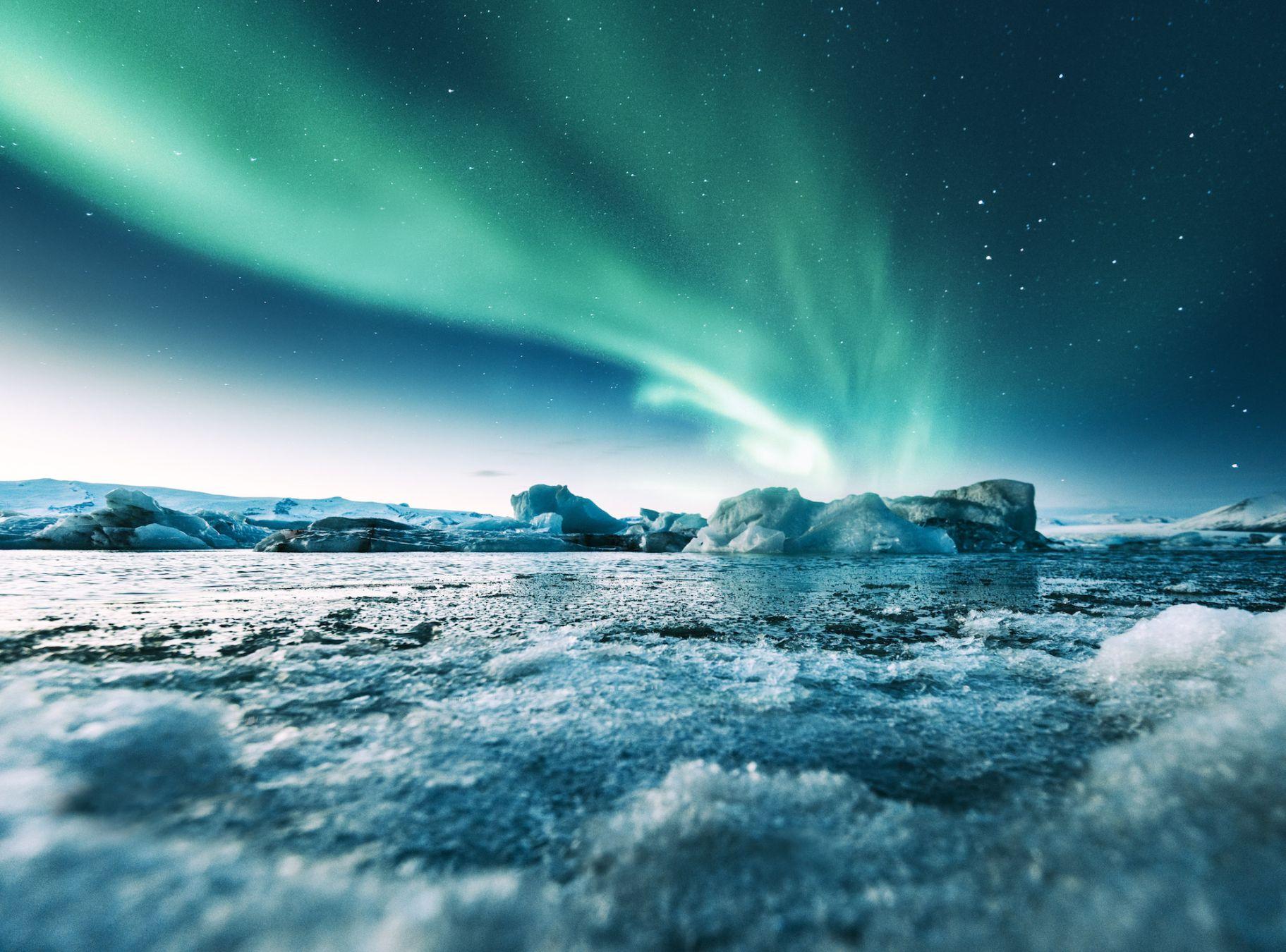
Northern lights in the Jökulsárlón glacial lagoon ©Getty Images
1 Southeast Iceland
There is no shortage of epic scenery in Iceland: steaming volcanoes, glaciers the size of small nations, roaring waterfalls, towering geysers and all manner of bizarre rocks and steam jets are joined by ice caves from November to March. When temperatures drop and safety conditions permit, it is possible to visit them; some remain unchanged from year to year, others are created from scratch, carved out by melting waters in spring-summer.
Vatnajökull, Europe's largest glacier, is the ideal place to admire them. The beautiful Crystal Cave, not far from the glacial lagoon of Jökulsárlón, is among the oldest and easiest to reach; others require a challenging crampon walk. In addition to Vatnajökull, Langjökull and Mýrdalsjökull are also home to some ice caves.
The programme
Exploring ice caves and glaciers requires an experienced guide. Join a two- or three-day tour that includes glaciers and more classic sites, such as the black sand beach of Vík, the Seljalandsfoss waterfall and the Eyjafjallajökull volcano. Spend a night in Reykjavík and visit the Perlan, where you will find an exhibition dedicated to ice caves. While you're there, try to spot the Northern Lights.

The wild coast of Rossnowlagh ©Rolf G Wackenberg/Shutterstock
2 Donegal, Ireland
Pack your heavy wetsuit! Thanks to its magnificent Atlantic swells, the rugged, wild Donegal coastline is Ireland's surfing capital, and November is one of the best months (at least for slightly more experienced surfers) to dive in. Sure, it's cold - though less so than in the middle of winter, when the sea gets even colder - but it's worth it.
Rossnowlagh beach is best for the less experienced. There is an exceptional reef-break, The Peak, at Bundoran, excellent breaks also at Tullan Strand and more untamed waves at Inishowen, Dunfanaghy and Dungloe. To watch brave (or crazy?) surfers brave the ocean, head to Mullaghmore. Little Bundoran is the main hub, and home to several surf schools. It boasts classic seaside town winter shopping centres, but also a relaxed atmosphere and a few nice pubs and cafes. Plus a few nice hills, on which to climb to admire the ocean crashing on the beach.
The programme
Bundoran is Donegal's southernmost point - from here, head north along Donegal Bay Drive, which passes the cliffs of Sliabh Liag, the historic town of Ballyshannon, bustling Donegal Town and the bays and valleys of Kilcar and Carrick.

The lunar landscapes of Lanzarote ©Fernando Tatay/Shutterstock
3 Lanzarote, Canary Islands
The beautiful beaches of Lanzarote - some of soft golden sand and others of black rock - are an irresistible temptation, even in November, when temperatures can reach 23°C and the sea is still quite warm. But the real ace up the sleeve of the easternmost and northernmost of the Canary Islands is its ability to offer opportunities for outdoor sports while the rest of the continent shivers.
A self-declared European Sports Destination, Lanzarote attracts runners, triathletes, golfers, surfers and sailors. You will therefore find excellent specialised agencies, rental equipment and dedicated hotels. Cyclists especially love Lanzarote: this wild, volcanic island, caressed by turquoise waves, boasts quiet roads with a non-dramatic drop, some of which cross the lunar landscapes of the Parque Nacional de Timanfaya. The winds, however, can be strong, which is also the reason why so many surfers and windsurfers like to spend their holidays here. A good base is Costa Teguise (where an Iron Man is held every spring), on the east coast, which provides easy access to Timanfaya and the northern peaks.
Canary Islands

Among the alleyways of Bécherel © zjtmath
4 Brittany, France
Are you the kind of person who, when the cold weather arrives, loves to curl up on the sofa with a book and a blanket? Then come to Bécherel. This Breton village, which has earned the title of Petite cité de caractère, was once a centre of the textile industry built around a 12th-century castle, and has been a 'city of books' since 1989. It now boasts 15 bookshops; some specialise in specific topics, others have charming cafés, and all encourage readers to browse books. The Maison du Livre cultural centre is open all year round, and a large second-hand book market is held every first Sunday of the month.
Thanks to its flax and hemp cultivation, Bécherel was also named the country's first Paper Town, and from June to October, it is possible to attend individual calligraphy classes with local experts. Bécherel is not large, so combine a literary break with long walks among the ramparts caressed by the sea breeze of Saint-Malo, delicious oysters enjoyed on the harbour of Cancale and strolls along the narrow streets lined with gabled houses of Dinan.

the Parque Nacional de Monfragüe © AMCWW
5 Extremadura, Spain
Given its scorching climate, Extremadura is a destination for the brave few in summer. Much better to wait until autumn to venture into this remote and wild corner of Spain, when the mercury does not exceed 15°C and the birds are back in sight. Extremadura is one of the main sites where many avian species (great bustard, ganga, vanellinae, lark, golden plover) come to winter in the arid Spanish steppes. November is also the ideal month for spotting eagles (golden, Iberian and banded), which fly over the rocky valleys wedged in the autumn landscape. An unmissable sight is the many cranes that gather over the cultivated and irrigated land. The region's reservoirs are also home to large numbers of ducks, while the Parque Nacional de Monfragüe is the place to be if you want to spot griffon vultures and other birds of prey (and maybe some otters).
The programme
The best airports to access the region are Madrid, Lisbon (Portugal) and Seville. The historic town of Trujillo, birthplace of conquistador Francisco Pizarro, is a good base; allow a few days to at least visit its medieval castle.

The snowy landscape of Ruka ©Borisenkov Andrei/Getty Images
6 Ruka, Finland
Can't resist the desire to ski any longer? Head to Ruka! Located in the far north of Finland and always blessed with reliable snow, this mountain resort boasts Europe's longest non-glacier ski season. The slopes here usually open in October (although they are at their best from November onwards) and don't close until May - giving you 220 days of skiing (or snowboarding) every year.
Ruka is pretty and car-free, and is perfect for families: it has the largest beginners' area in the country and an excellent network of ski lifts, and offers many other activities besides skiing, such as dog-sledding, bobsledding, ice fishing and snowmobile rides, river floating (yes, even in winter!) and traditional saunas. The slopes, 35 in all, are never crowded; many are illuminated, so you can ski through the long Arctic night. At the end of the day, treat yourself to an excellent dinner and some alcoholic après-ski: Ruka may be small, but it is full of places to have fun. Keep an eye on the sky for the Northern Lights.